|
 HOME
HOME
NEW SALES
BROKERAGE
SERVICE
MMS Staff
NEWS
SHIP'S
STORE
LOCATION
EMPLOYMENT
LINKS
| |
The oceans play a role in our lives for food, recreation, climate change and
their importance cannot be overstated.
Our oceans are in deep trouble, pun intended.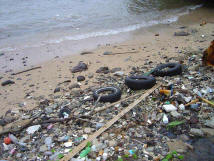
How we live our everyday lives effects every molecule making up the incredibly
complex bouillabaisse simply described as life on earth. Each of us, most
thinking scholars agree, can make a difference. If we do not, it will come to
haunt us. It is not as if this doomsday specter lives only in the imagination of
those who use numerical sequence, ancient predictions of dubious connection,
séance, shamans or slanted data to provide a rousing cocktail party subject. It
looms on the horizon as large as a Florida thunderstorm and if we continue, it
will change the earth we inhabit to an unpredictable, malevolent host instead of
the paradise we have stewardship of.
Our oceans are the foundational backbone for life that has evolved as we now
enjoy it, providing the primordial soup that allowed mankind, the predecessors
of every variety and those that may follow to rise for what may be a relatively
small tick on the face of time, unless we begin now.
The blue oceans that make our planet so distinctive from space are the very
epitome of resiliency. If we all do a little, none of it onerous, we can bring
it back from the brink of utter catastrophe. A few examples follow that can
literally turn the demise of our ultimate playground and provider of life as we
know it into a life sustaining, irreplaceable, ongoing asset which generations
to come can enjoy as we have in the past.
 Enjoy the
shoreline responsibly with a larger view. Think globally and act locally, in
your own everyday lifestyle. Consider the following small adjustments to your
lifestyle. If we each reduce the amount of trash we accidentally or purposely
send to the ocean by only one plastic bag each, the effects will be far
reaching, cascading, creating a domino affect on everything downstream.
Succinctly put by one of our contributors to the Marlow Marine Newsletter we all
live downstream. Enjoy the
shoreline responsibly with a larger view. Think globally and act locally, in
your own everyday lifestyle. Consider the following small adjustments to your
lifestyle. If we each reduce the amount of trash we accidentally or purposely
send to the ocean by only one plastic bag each, the effects will be far
reaching, cascading, creating a domino affect on everything downstream.
Succinctly put by one of our contributors to the Marlow Marine Newsletter we all
live downstream.
Going to the beach is the least expensive, most available leisure pursuit for
all Americans. It also ranks No. 1 in outdoor recreational activity for
Americans. Over 60 million Americans visit the coastline each year, yet we treat
these once pristine shores as our garbage dump, even with innocent intent.
Picnic trash:
We carry a variety of consumable goods to enhance our day at the shore, and we
leave many of the wrappings, ingredients and debris at the shore. Some are
innocently lost due to a gust of wind that picks up the plastic bottle, six pack
holder, wrapping materials and a myriad of other harmful items. Carry a reusable
canvas bag to the shore to capture those disposable items and place them where
appropriate in the recycle stream to reduce the long chain of impact on the
environment. Though no reliable figures exist with which to make a case for the
absolute volume of debris the family picnic or sundown excursions may deposit,
it is safe to say that eight ounces per visitor is a conservative amount.
Multiply the eight ounces times the 60+ million visitors (also very conservative
and we quickly see that an innocent appearing family recreation can deposit
thirty million pounds of harmful residue in our oceans in America alone. The
thirty million pounds of plastic now degrades the entire environment and is
replaced by thirty million pounds more, with its attendant waste of resources
from oil, reduction of air quality due to the manufacturing process, usage of
fossil fuels to deliver the end product, perhaps half way around the world. It
is indeed a game of dominos and one we are losing.
Cigarettes:
We tamp out cigarettes, with their long lived filter elements into the sands,
out of sight, out of mind. Laden with a toxin so potent (nicotine) it is deadly
to virtually every living organism, this filter becomes a dispensing sponge
years, dispensing its poison, little by little, leaching into the sands and
onward to the sea. Though of miniscule proportion individually, consider that
the Center for Disease Control estimates that 48 million Americans alone smoke
approximately 40 cigarettes per day over a waking period of approximately 15
hours. That is a bit more than one person in every six of us, who smoke. If
sixty million Americans visit the shoreline each year, about 10 million will be
smokers.
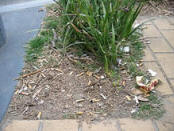 If
each spends three hours at the shoreline, an average of eight filters, cigarette
ash and tobacco will join the garbage stream flowing into our world’s waters.
That is a total of eighty million cigarettes, (4 million packs) laden with
poisons becoming time release time bombs. To this add the daily repulsive habit
of tossing these same merchants of death onto our sidewalks, streets and byways,
where they all end will end, by contaminating the drains that flow to the
canals, the canals to the sea, If all smokers disposed of their wastes properly,
in a properly managed municipal landfill with liners to prevent the leaching of
these poisons, we could save 928 BILLION cigarettes a year from leaching their
toxic poison ultimately into our ground water and our oceans. That’s 46 Billion,
400 million packs a year. Since a pack weighs about two ounces and we can assume
about 50% of its total length remains when discarded, that is Eleven Billion,
Six Hundred Million POUNDS of poison a year that does not have to poison our
earth. Consider also that in the daily routine of scrambling for food how many
of these little poison packets are artificially ingested by our aquatic and
avian earthlings. The staggering number just portrayed is from Americans alone.
Imagine if we could convince the whole world, of which we are a bit over 5% of
the total number to do the same! From small droplets oceans are formed; from
small drops of poisons they are being destroyed. If
each spends three hours at the shoreline, an average of eight filters, cigarette
ash and tobacco will join the garbage stream flowing into our world’s waters.
That is a total of eighty million cigarettes, (4 million packs) laden with
poisons becoming time release time bombs. To this add the daily repulsive habit
of tossing these same merchants of death onto our sidewalks, streets and byways,
where they all end will end, by contaminating the drains that flow to the
canals, the canals to the sea, If all smokers disposed of their wastes properly,
in a properly managed municipal landfill with liners to prevent the leaching of
these poisons, we could save 928 BILLION cigarettes a year from leaching their
toxic poison ultimately into our ground water and our oceans. That’s 46 Billion,
400 million packs a year. Since a pack weighs about two ounces and we can assume
about 50% of its total length remains when discarded, that is Eleven Billion,
Six Hundred Million POUNDS of poison a year that does not have to poison our
earth. Consider also that in the daily routine of scrambling for food how many
of these little poison packets are artificially ingested by our aquatic and
avian earthlings. The staggering number just portrayed is from Americans alone.
Imagine if we could convince the whole world, of which we are a bit over 5% of
the total number to do the same! From small droplets oceans are formed; from
small drops of poisons they are being destroyed.
Use a waterproof suntan lotion instead of an oil laden concoction to foul the
waters (and your clothes). Think it is of little consequence? Look back to those
sixty million beachgoers earlier cited. Give each of them only one half ounce
(very conservative) of oily lotion and that provides Mother Ocean with a staggering
500,000 gallons of oil per year. Want to account for a bit more that gets rubbed
off on the beach towels? Even worse. The towels go to the washer and the oil is
emulsified by a potent laundry detergent, where it travels to the
city sewer collection system and is eventually pumped into the oceans at coastal
cities like Miami, Fort Lauderdale, Sarasota and other “pristine” landscaped
paradise spots.
Yes, these cities use the oceans for dumping grounds. After little more than a
thorough grinding and the injection of one of the most potent life killing
compounds known to man (Chlorine) it is “clarified” enough to dump into the
Pristine Gulf Stream where we send it on to Nova Scotia, Scotland and other
ungrateful recipients. How much do we send them?
Miami alone sends Fifty million gallons a day of its reject filth into the Gulf
Stream just two miles out of Government Cut. Want to see it? Go due east two
miles and look for the scavenging gulls in thick flocks eating a free lunch of
processed sewage.
.
When you do visit the shore, why not bring a bag, canvas preferred and take a
bit of trash home with you, placing that which is appropriate in the recycle
stream and that which is not in the landfill group. Remove a bit of litter when
you go.
Plastic usage:
Plastic food wrappers, bags, balloons, bottles, cigarette filters and packages,
monofilament fishing nets and line, foam packing peanuts and other plastic
objects make up more than 50 percent of the junk found on the beaches and about
90 percent of the debris found floating in the oceans of our world. Today, I
walked only one quarter mile in each direction from our home on the beautiful
Manatee River and collected 15 pounds of assorted plastic and related debris.
The Manatee is one of the cleanest rivers I am aware of and certainly no toxic
waste dump, yet the shores contained one pound of plastic debris for each of the
expensive homes lining its lovely shores.
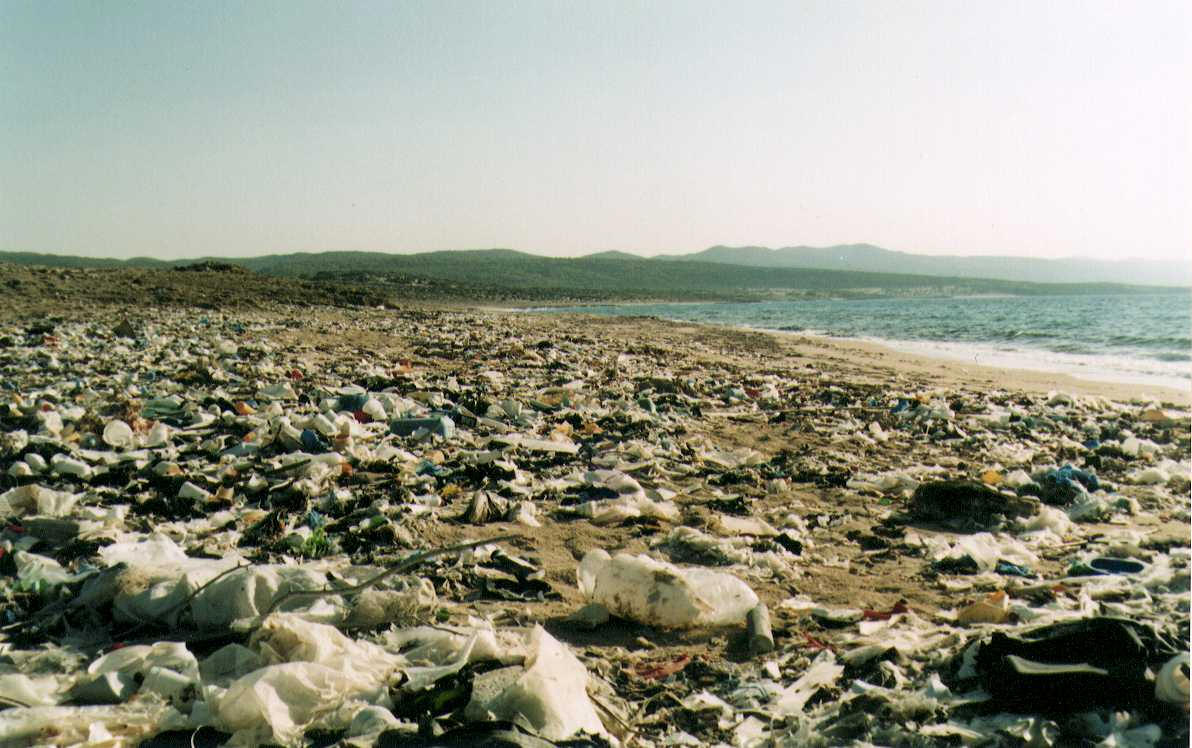
On a
recent trip to Fort Lauderdale, Florida I was appalled to see twenty to thirty
foot long “plasticbergs”, covered in oil, drifting as one along the New River.
This, the “Yachting Capital of the World". The only thing “new” about
this river is its ever increasing intake of garbage, sewage, lawn pesticides,
urban runoff, and assortment of toxins.
Always take a canvas tote bag for groceries and other purchases. Many grocery
stores have recycling bins for plastic grocery bags. Carry yours back when you
shop in those cool looking canvas bags if your city does not responsibly
recycle. You ladies shop for hours looking for just the right accessories for
your outfit, including a nice looking bag. May I suggest that seeing you carry
your groceries home in a plastic dinosaur derivative does nothing for your
style. Use some of those cool looking bags we give out at Rendezvous’ and other
events.
Eat seafood that is non toxic, caught responsibly and sustainable.
”Non Toxic" means that it is not a fish far up on the feed chain that has
absorbed all the poisons of those on the way up. Swordfish is laded with Mercury
for example. It has not cleansed itself since the dire warnings of the 70's. The
government simply bowed to commercial pressure and raised the allowable
standards, issuing a warning to the usual hyper susceptible group to avoid it.
Similar to the dire warnings on the cancer sticks, no one reads it.
"Sustainable" means that it's not being caught faster than it can reproduce. Even
healthy numbers of species may not mean they're healthy to eat. As described in
the paragraph above, toxic chemicals that enter the sea become more concentrated
higher in the food chain, where larger predators, such as tuna and swordfish,
may contain higher concentrations of mercury and other toxins than sardines,
lobsters, crabs and other organisms lower on the food chain. A flounder eating
shrimp raised over a healthy grass bed is a much wiser choice and frankly, a
swordfish is no delicacy by comparison.
Buy wild salmon instead of salmon raised on fish farms. Fish farms produce waste
that pollute surrounding waters, including heavy concentrations of antibiotics,
causing them to rapidly lose their effectiveness as the various toxins become
used to them in small dosages.
Choose abundant species such as calamari (squid), Pacific halibut or mahi-mahi,
rather than over fished species such as orange roughy, grouper and shark.
Get yourself a pocket guide to use when you shop or have dinner out. In the area
where the author lives, (Southwest Florida) Mote Marine Aquarium's (www.mote.org) information
desk carries an abundance of good information including an informative pocket
guide. Send a stamped, self-addressed envelope to Mote Marine, 1600 Ken Thompson
Parkway, Sarasota, FL 34236 and request a free guide and other pamphlets to
teach us better habits. Founded by the late Bill Mote, Mote Marine carries out a
rich variety of research. Some forms, including the guide can also be printed
off the Internet at www.seafoodwatch.org but it’s not as nice as the guide
available from Mote. Why not send them a few bucks with your request to help in
a really worthy cause?
Boating Practices:
Of course most of the above hints can be applied to our favorite recreation, our
boats. There are other basic “good husbandry” practices we can easily make our
habit and reap large rewards for us and all who may come behind us, if we leave
anything for them.
Touching or standing on corals can cause them very serious damage. The coating
that protects coral is disturbed each time we touch it and renders it open to
any passing toxin, which as we have seen, is pernicious, or all encompassing.
Please careful when anchoring a boat. Your anchor can destroy a hundred years of
coral growth, vital to the eco system, in just one casual drop. Anchor on sand,
never coral.
Our waters are polluted and poisoned not only from land-based runoff, but also
from the exhaust pipes of the millions of automobiles we Americans are in love
with. Contributing to nitrogen buildup in offshore waters, this building block
of fertilizer (nitrogen) is linked to algal blooms and oxygen-depleted dead
zones The G-Breve and similar cousins found in ever increasing particulate count
in our waters are like guppies awaiting the daily feed from the fish food
shaker. Their affect on sea life is utterly devastating. Of course American
vehicles also contribute the major proportion of the world's carbon dioxide
emissions, a key factor in global warming. In fact, we are the world’s largest
polluter. No one else is close. Not India and China combined, with nearly twenty
times our population pollute a fraction as much nor exhaust a fraction of the
world’s resources compared to Ameica.
Climate change, driven in large part by these emissions is already affecting the
oceans we love. There can be no mistake that the oceans levels are rising, water
temperatures are increasing, and erosion and storm surges are routine news.
The bleaching and killing of coral reefs here long before any semblance of us
is an epidemic.
Household Habits:
Stop treating your storm drain like a flushable toilet.
Storm drains do not lead to local water treatment plants and even if they did
the vast quality would simply be discharged into the canals, rivers and oceans,
similar to many cities along Florida’s east coast.
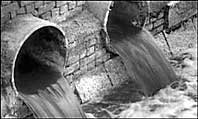 These
conduits carry virtually every harmful chemicals and pollutant from lawns and
streets into nearby rivers, bays or the sea. Even if recycled and dumped on the
golf courses to attract more visitors and residents, it simply enters the ground
water supply. This practice and others have practically rendered the home owners
well, once the staple of our water supply toxin laden storage pit, once again,
out of sight, out of mind. These contaminants not only harm the seas, but marine
life, land animals and we humans. Would you swim in the golf club
pond? Good luck if you are so unwise, yet it stands as a lovely creation of
mankind, while in fact it is a pesticide laden toxic pit. These
conduits carry virtually every harmful chemicals and pollutant from lawns and
streets into nearby rivers, bays or the sea. Even if recycled and dumped on the
golf courses to attract more visitors and residents, it simply enters the ground
water supply. This practice and others have practically rendered the home owners
well, once the staple of our water supply toxin laden storage pit, once again,
out of sight, out of mind. These contaminants not only harm the seas, but marine
life, land animals and we humans. Would you swim in the golf club
pond? Good luck if you are so unwise, yet it stands as a lovely creation of
mankind, while in fact it is a pesticide laden toxic pit.
Use as little soap as possible soap when washing your car. When you do, use an
organic soap, never a detergent.
If you use or your lawn service uses chemicals on your lawn, don't let them
spray them on a windy day or just before a rain, if you do, you are sending them
right to our beautiful oceans via the storm drains. Every drainage grate should
be emblazoned with the information that “This Drains Into Our Oceans”. In Mother
Ocean's case, it does indeed live downstream of it all. Consider a storm drain
stenciling project, where volunteers can paint images of fish or waterbirds on
the drains with warnings such as "No Dumping! Flows to our seas."
Don't purchase dietary supplements such as coral calcium, shark cartilage,
turtle oil or shark liver oil made from endangered marine life. You are just
aggravating the problem by providing a market that will surely kill the basis of
our life as we know it.

Eat organic and vegetarian foods as
often as possible, reducing the tremendous outflow of pesticides and fertilizers
into our waters.
Rains wash fertilizers used on crops in the Midwest ultimately into the
Mississippi River, where they eventually reach the Gulf of Mexico and contribute
to massive algae blooms that cause oxygen-depleted "dead zones." Pesticides used
on crops pose other dangers to the marine environment. Concentrated animal feed
operations for cattle, poultry and hogs intensify pollution from animal
processing wastes that can harm sea grasses, reefs and other ecosystems.
Buy organically grown foods whenever possible to reduce the amount of chemical
fertilizer flowing to the sea. Support green companies large and small that vow
to be responsible custodians of out earth.
Buy fresh, locally grown foods to support local farmers and reduce the amount of
oil used to transport foods. Large commercial operations like ADM, Cargill, etc.
are wasteful and abusive of our environment.
Keep your household refuse as nontoxic as possible. Cleaning products, batteries
and other toxic materials tossed into the garbage eventually leach out of
landfills and into the planet's water system, where they concentrate in
plankton, a food source for small fry, baitfish and onward, upward through the
food chain until we ingest it, finally sending to back to the environment
through massive outfalls like the one described at Miami and many so called
“clean cities along the coast. These contaminants will simply build up as the
baitfish are eaten by larger fish that, in turn, are consumed by humans and
marine mammals.
Chemical and heavy metal wastes have been linked to increased risks of cancer,
birth defects, developmental problems and neurological diseases. Much of this
ring of death could be eliminated if we'd just replace the toxic chemicals
around us with benign and nontoxic alternatives. Look under your sink and read
the ingredients. Use baking soda, vinegar, lemon juice and water instead of more
harmful and expensive commercial products when cleaning ovens, kitchen counters,
windows and mirrors. Baking soda freshens drains and is benign to our
environment.
Please save household batteries, computers, television sets and other appliances
containing harmful components from the trash. Instead, dispose of them through a
local recycling center. Drugstores, office supply stores and many other
merchants now accept batteries and printer cartridges for recycling.
Vote for those who protect our environment. Not the slick haired, silk tongue
refugee from James Watt’s school of ecology. (For those of you who are
unfamiliar with Mr. Watt, he is perhaps the poster boy of polluters from an
earlier administration that allowed rampant destruction and giveaways of our
resources). Check their record, not their rhetoric. Don’t vote for them because
they speak nice, look nice or promise the moon. Have thoughtful discourse about
the real agendas, not buzz word laden superlatives gleaned from a sensationalist
television report.
Let your elected representatives know that how they treat the environment and
especially the ocean will influence your vote.
Compile a list of whom your local and national elected representatives are and
where they stand on key ocean-protection measures. Don’t listen to their bull
smoke, check their voting record.
Write and call your elected officials to tell them your support for them will
depend entirely on whether they take strong ecology, especially marine oriented
conservation positions. I urge you to call and write because even though you
won’t usually get to speak directly to the representative, believe me, the
secretary will get his/her ear and advise them which way the wind is blowing.
Write your local member of Congress and demand they join the bipartisan House
Oceans Caucus and support its comprehensive ocean-protection plan.
The rainforests are of utmost importance in our scheme of life but pale in
comparison to the contribution of the worlds oceans in providing life giving
oxygen tour atmosphere. The world’s oceans supply 70 percent of the oxygen we
need to live. The oceans are the forming foundation of weather and climate
affecting all parts of the world. Nitrogen and phosphorus runoff from farms in
the Midwest adversely affects the Gulf of Mexico and other coastal areas.
Stop buying chemical laden Archer Daniels Midland, Cargill Brothers and other
super merchants of additive laced food products. Yes, it costs a little bit
more, but in return you are a more healthy and productive member of the human
race, enjoying a taste that the preservative laden offerings from the Mega
distributors cannot hope to match. And you support the smaller, hard working
farmer who is fast disappearing, leaving our food choices entirely in the hands
of a few who are governed primarily by profit.
Promote family farming and local farmers’ markets. Small, diverse farms usually
rely on fewer chemicals and generate less waste than huge industrial farming.
This results in a domino effect, reducing the production of these world altering
chemicals, a subsequent reduction in the loads imposed on our oceans and
instills a cycle of good for everyone except the greedy.
Keep oil off our shores.
The overt and covert battle over offshore drilling continues to heat up in
Florida, Virginia and other states. Three major national marine sanctuaries off
California, Florida and Massachusetts were established in 1980 in a bitter fight
to stop Ronald Reagan’s administration from taking these rich underwater
resources for corporate greed. The energy lobby and Washington politicians are
once again pushing to reopen offshore waters. At the same time the existing oil
baron administration has placed a 50 cents per gallon import duty tax on ethanol
or other substitutes that could reduce our dependency on harmful (to our
economic and physical ) health, rendering it uncompetitive with oil..
How much duty tax did they place on imported oil? Not one red cent!
Check with your power company. If they offer “green energy” options, switch to
one of them.
Approximately 10 million Americans enjoy recreational saltwater fishing. Will
they have anything to pursue in the future if we continue on our present course?
Follow fishing regulations by obeying season, size and bag limits. The stock
does need time to rest and seed itself and you can do your part. Fish for
species that are abundant; avoid species that are over fished or poorly managed.
While we criticize from our halls of power other nations use of coal power to
produce energy, factually, most U.S. power plants still burn coal, the oldest
and most polluting of all the fossil fuels. Coal plants produce both sulfur
dioxide, which causes acid rain, and nitrogen oxide, which creates smog.
Coal-burning power plants release mercury, a neurotoxin that builds up in the
flesh of tuna, swordfish and other large ocean predators and poses a health risk
to marine life and seafood consumers. In fact to all of life as we know it.
Have your power company to provide a free home energy audit, which will include
suggestions for saving on your electric bill by reducing wasted energy.
Replace incandescent light bulbs with compact fluorescent bulbs, which are
initially more expensive but can save you $60 over the bulb’s life.
Buy EPA-rated Energy Star appliances such as a washer/dryer, air conditioner and
refrigerator. They reduce pollution and greenhouse gases and will save on your
energy bill.
Mercury is killing our Marine Life
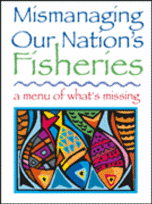 |
Once
upon a time, our oceans were abundant and clean; it can be again but
it’s not a fairy tale situation today. Most of the world's 17 major
ocean fisheries are in decline, important coastal habitats are
disappearing at an alarming rate, and climate change and pollution are
harming coral ecosystems at an unprecedented rate. These facts are sad
testimonials to the level of attention the health of the ocean receives
from individuals and governments although the same ocean provides so
much to the people of the world. |
Across the United States, mercury
pollution is known to have contaminated 12 million acres of lakes, estuaries,
and wetlands (30 percent of the total), and 473,000 miles of streams, rivers,
and coasts. And many waterways have not even been tested. In 2003, 44 states
issued fish consumption advisories, warning citizens to limit how often they eat
certain types of fish caught in the state's waters because they are contaminated
with mercury.
Two of the biggest sources of
mercury pollution are chlorine chemical plants and coal-fired power plants.
Chlorine plants, which use massive quantities of mercury to extract chlorine
from salt, "lose" dozens of tons of mercury each year; power plants emit around
50 tons of mercury pollution annually. Facilities that recycle auto scrap are
another big source of mercury pollution, pouring 10 to 12 tons of mercury into
the air every year. The most common way Americans are exposed to mercury is
through tuna fish.
Coal is naturally contaminated with
mercury, and when it is burned to generate electricity, mercury is released into
the air through the smokestacks. The bulk of this mercury pollution could be
eliminated with the installation of pollution-control devices. Similar devices
have proved very successful on municipal incinerators, which were once a
significant source of mercury pollution. But in January 2004 the Bush
administration proposed to weaken and delay efforts to clean up mercury
emissions from roughly 1,100 coal-fired boilers at more than 460 electric power
plants. Essentially, the administration's plan treats mercury as if it were a
run-of-the-mill air pollutant instead of a hazardous air pollutant, allowing the
Environmental Protection Agency to avoid requiring power plants to reduce
emissions by the maximum amount technologically achievable.
Big mercury polluters also include
older mercury chlorine plants, also called chlor-alkali plants. These plants use
mercury to convert salt to chlorine gas and caustic soda (better known as lye),
which is used in soaps and detergents, in plastics, and in the paper-making
process. More modern chlor-alkali plants use a cleaner, mercury-free technology,
but eight U.S. chlor-alkali plants continue to use mercury. (Two of these have
announced plans to shift to cleaner technologies.) At any given time, each
of these plants has an average of 200 tons of mercury on site. In virtually
every year since records have been kept, chlor-alkali plants have "lost" dozens
of tons of mercury in the manufacturing process. These plants cannot account for
where the lost mercury goes. Nor can the Environmental Protection Agency, but
the agency has failed to set restrictions on these emissions. NRDC air quality
tests have detected high levels of mercury in the vicinity of four chlor-alkali
plants.
Once pollutants land in the
marine ecosystem, they can increase in concentration all the way up the food
chain. Therefore, larger and older fish are more likely to be contaminated with
dangerous levels of toxins such as mercury; species to be careful about
consuming include tuna, swordfish, and shark (In addition, some of these species
should not be considered for consumption for ecological reasons). The Children's
Health Environmental Coalition has a
Safe Fish Chart
that
is well worth reviewing.
The above represents just a small start, one achievable by all of us. Yet if we
all take heed and do our part, we can save our most precious resource.
We are after all, the water planet. Go on the Internet tonight and visit a site
that shows earth from outer space. There are many, but all reflect the fragile
beauty of a unique ecosystem. Do we really want to destroy in just over 200
years of industrialization, what was crafted by eons of loving care by a most
benevolent Sky Boss?
We hope you will join the entire Marlow group of companies, from Marlow Marine in
Snead (Paradise) Island, Florida, to our award winning, first and only Green
Environmental Norsemen Shipyard in Xiamen China. We are committed to the
enjoyment of life and the sustaining practices to keep it healthy, for all time.
|
